I am a Professor of Economic and Social History at the University of Oviedo, where I lead the h-ECOS research group (History, Economy and Society). In the past I was employed by the universities of Cantabria and Zaragoza, and I have also been a visiting scholar at the universites of Italian Switzerland (Lugano) and Lund.

My research deals with the transformation of modern diets in Spain, the depopulation and development of rural areas in Spain and Western Europe, the European Union's Common Agricultural Policy, and consumer society in the history of economic thought.

I use a historical approach in order to understand socioeconomic problems. I believe that looking at the long term not only helps us explain the past, but also allows us to understand in a better way what the present is about and what the future may/should bring.
CONSUMER SOCIETY IN THE HISTORY OF ECONOMIC THOUGHT

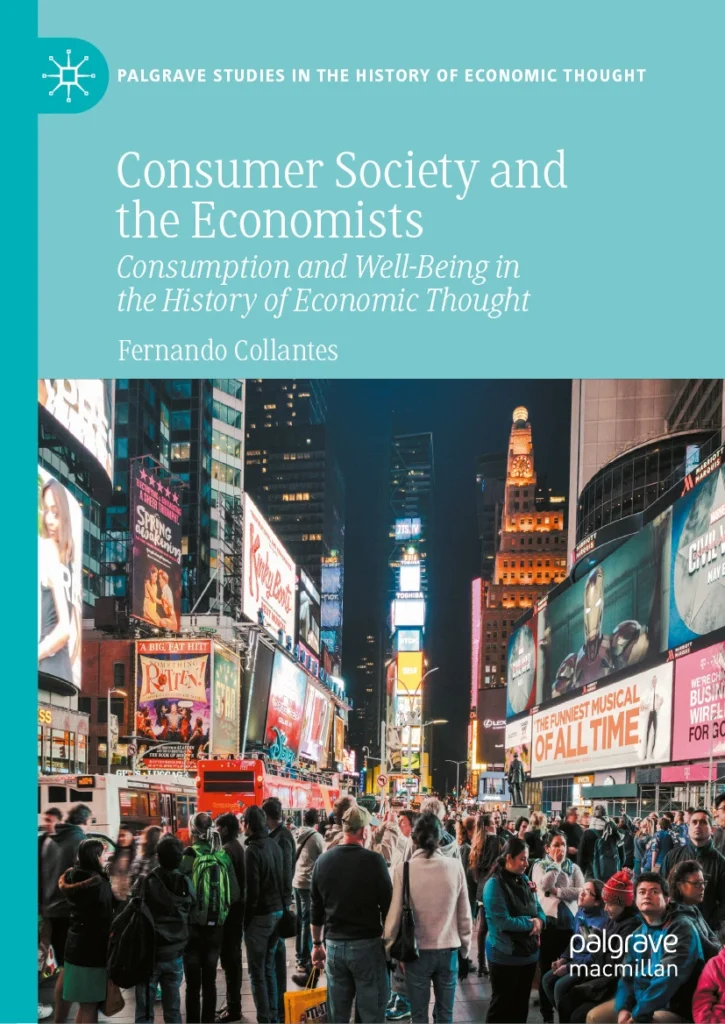
Is consumer society a vehicle for progress? Or is it a detour leading us away from the path to the good life? To what extent is consumer society a relevant object of analysis, anyway? Today, these questions are central to the debate on the dynamics of capitalism and their impact on human well-being. Yet, they are by no means exclusive to our time. This book traces the history of economic thought on consumer society from the late eighteenth century to the present day. It explores the ambivalence of classical political economists and Marx towards the world of consumption. It narrates the making of an intellectual battlefield between rival views of consumer society during the period 1870-1945 and the head-on clash that took place between those views during the decades after the Second World War. How these debates reemerged following the end of the Cold War and the Global Financial Crisis is also covered. This is the story of how economists debated consumer society and how that debate was shaped by another fundamental discussion: how economists should conduct their research.
 

THE RISE AND FALL OF GOOD DIETS IN SPAIN

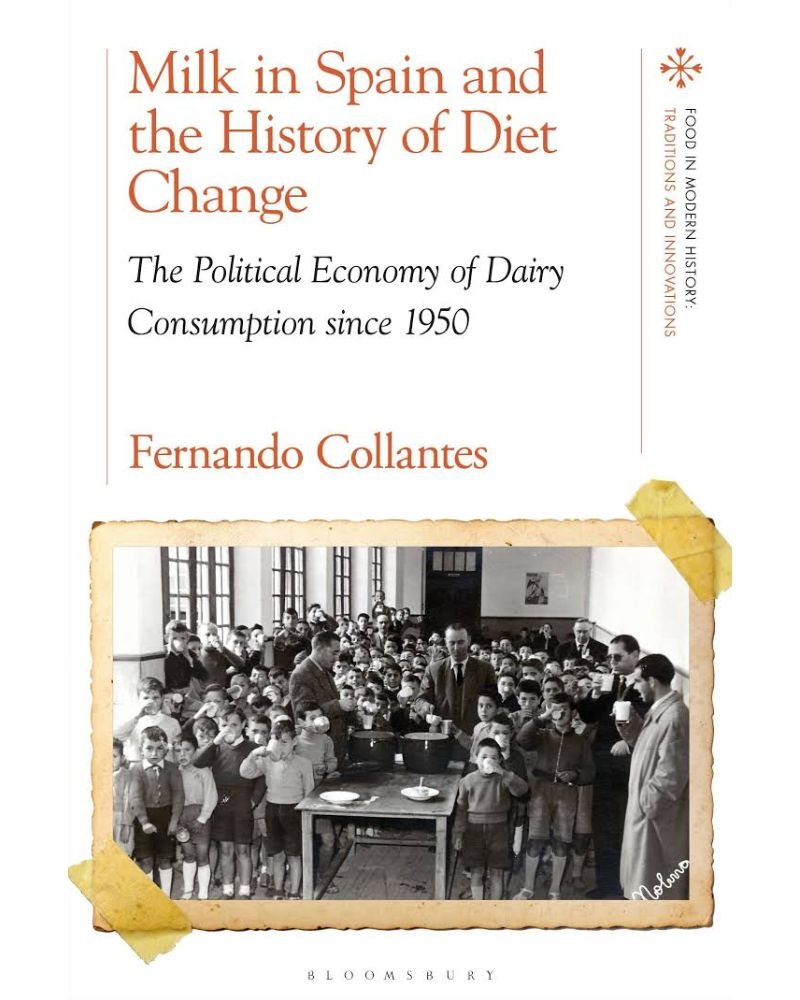
In this book, I delve into a case study, the consumption of milk and dairy products in Spain from 1950 to the present, to better understand the rise and fall of good diets in affluent societies. Building on a theoretical approach inspired by the socioeconomics of Joseph Schumpeter and employing a variety of quantitative and qualitative sources, I identify two waves of change in dairy consumption: the move towards mass consumption of processed milk (1950-1990) and the turn towards dairy products (1990 to the present). While the first wave made a
significant contribution to the well-being of the Spanish population, the
second ultimately had negative impacts both nutritionally and
socioeconomically. From this historical analysis, a policy conclusion emerges:
the state must abandon its adherence to the notion of consumer sovereignty and
vigorously implement economic and cultural policies that promote good diets.                                    

THE EU’S COMMON AGRICULTURAL POLICY

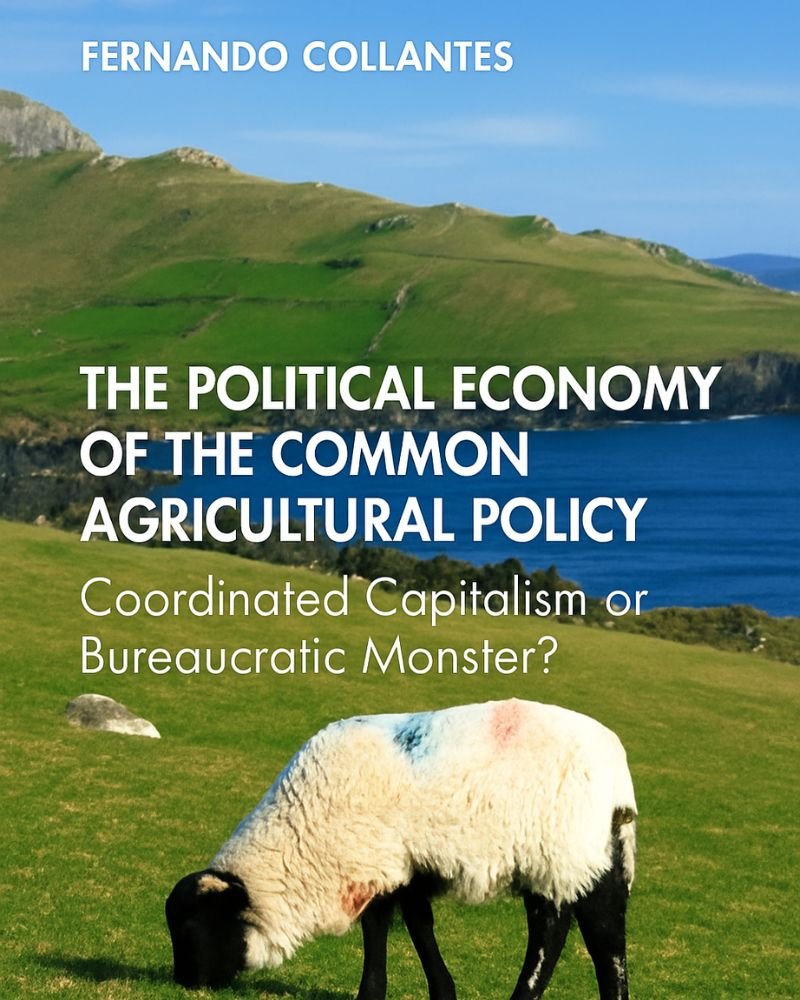
What is the balance of the Common Agricultural Policy more than half a century after its birth? Does it illustrate the virtues of the European model of coordinated capitalism, as opposed to US-style liberal capitalism? Or is it an incoherent set of instruments that exert diverse negative impacts and, like Frankenstein’s monster, seems to have escaped the control of its designers? In this book I do not criticize the CAP from the liberal standpoint that views most public interventions in the economy as bad for efficiency and welfare. The CAP has been costly to Europeans, both as consumers and as taxpayers, and has also generated a number of negative impacts upon third countries, but these costs and impacts have been more moderate than is suggested. This book proposes that the issue with the CAP is not a generic problem of coordinating capitalism but, instead, a more specific problem of low-quality coordination. Profound reform of the European Union’s institutions and policies is required to counter the rapid rise of a more Eurosceptical state of mind.

THE DEPOPULATION OF RURAL SPAIN

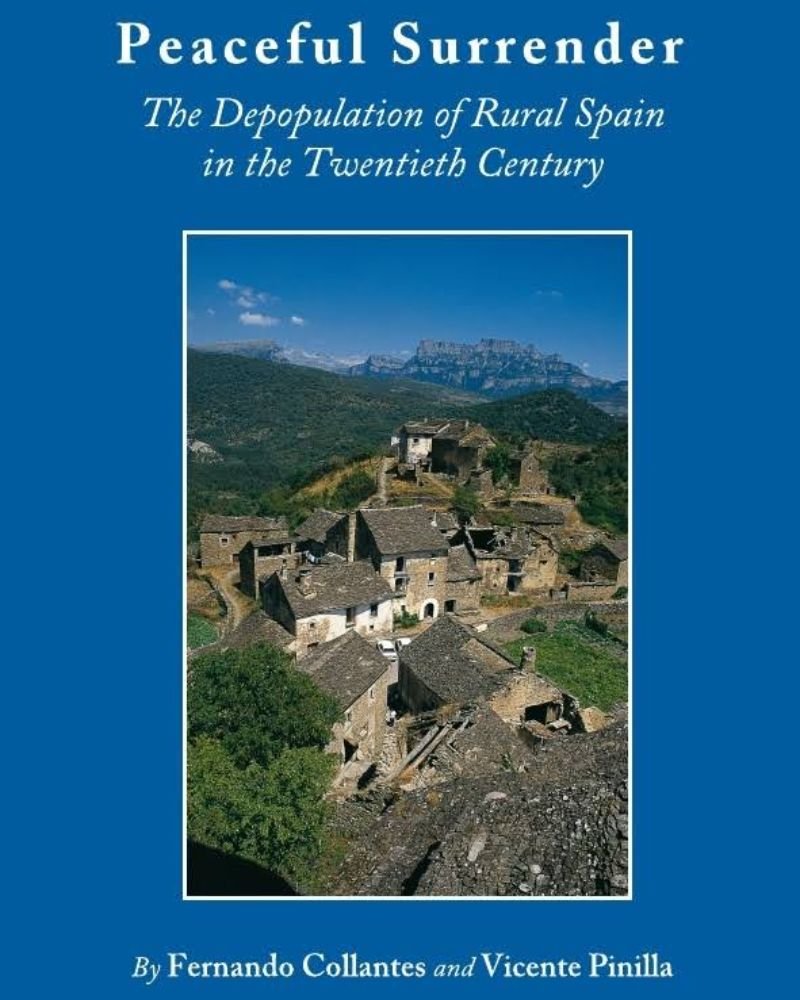
In the modern era, rural-urban migration intensified in an unprecedented way and many rural communities depopulated. This book analyses the topic for the case of Spain, which in the twentieth century experienced one of the most intense processes of rural depopulation in modern Europe. The interaction between Spanish industrialisation and rural migration, the demographic implications of agrarian change, the obstacles to the development of rural non-farm activities, the rural problems of access to infrastructures and services, the role of public policy, and the consequences of depopulation for the rural community are the central elements of this study, which inserts the Spanish case within its European context. Distanced from both the anti-modern stance that idealises paradise lost and the Panglossian mood that welcomes anything that came with modernisation, the book explains how the adaptive strategies put into practice by rural populations led to a “peaceful surrender” of traditional rural society.                      


If you want to read any of my publications, just contact me at collantesfernando@uniovi.es